
This essay also serves as an epilogue to the book Trump 2.5: A Primer (April 9, 2025)
“We work for America. We don’t work for the global order, we don’t work for other countries. We work for the United States.”
Secretary of State Marco Rubio, November 10, 2026
On the first anniversary of President Donald Trump’s inauguration, January 20, 2026, he delivered a weaving speech at a White House press conference. Almost every major issue he touched on remained unresolved. Iran, Ukraine, tariffs, immigration. It was a long open list despite the binder he brought along, touting the administration’s accomplishments. The event turned contentious rather than celebratory.
It was of little concern, however. Soon the president would be flying to more comfortable surroundings: the World Economic Forum (WEF). Chaperoned by his son-in-law, Jared Kushner, Trump presided over the signing ceremony of the Board of Peace, the de facto governing body for Gaza. In his speech, he praised Tony Blair, who was helping oversee the Board’s operations. President Trump had long criticized the invasion of Iraq in 2003, an effort the former British prime minister had championed. Now there was no daylight between them.
Despite all the talk of fighting globalism, the administration and its officials spent much of the first 18 months in office chasing their own profile at every global gathering they could, from World Bank meetings to G20 ministerials to the annual United Nations General Assembly confab. It was an intersection of quixotic bedfellows, but a sleeping arrangement, nonetheless. À propos, the inscrutable Paolo Zampolli, a Trump confidant, and McKinsey combined forces to support USA House at Davos.
Meanwhile, the specter of renewed conflict with Iran was rising in the background. Shortly after WEF, Kushner and Steve Witkoff, the real estate developer cum peace envoy, scurried off to Oman to negotiate with the Iranians on February 6. Meanwhile, the USS Abraham Lincoln sat nearby in the Arabian Sea, with the USS Gerald Ford set to join shortly.
All signs signaled a march to war to shape the global order. Would it Make America Great Again?
Back in Washington
It had been ten months since the release of Trump 2.5: A Primer. The book had led me into many interesting rooms and conversations. Washington, D.C. had long been a whirling pool of backroom deals and barely legal transactions. But since the inauguration of the 47th president, things had reached another level.
In early February 2026, I made another trip to Washington, D.C. My first stop was to see my former professor and frenemy, Mike Doran, at the Hudson Institute. As a proponent of the Iraq War, he had served on the National Security Council during the George W. Bush administration. The tenor of the conversation worried me. Mike was particularly giddy about the administration, perhaps unusually so.
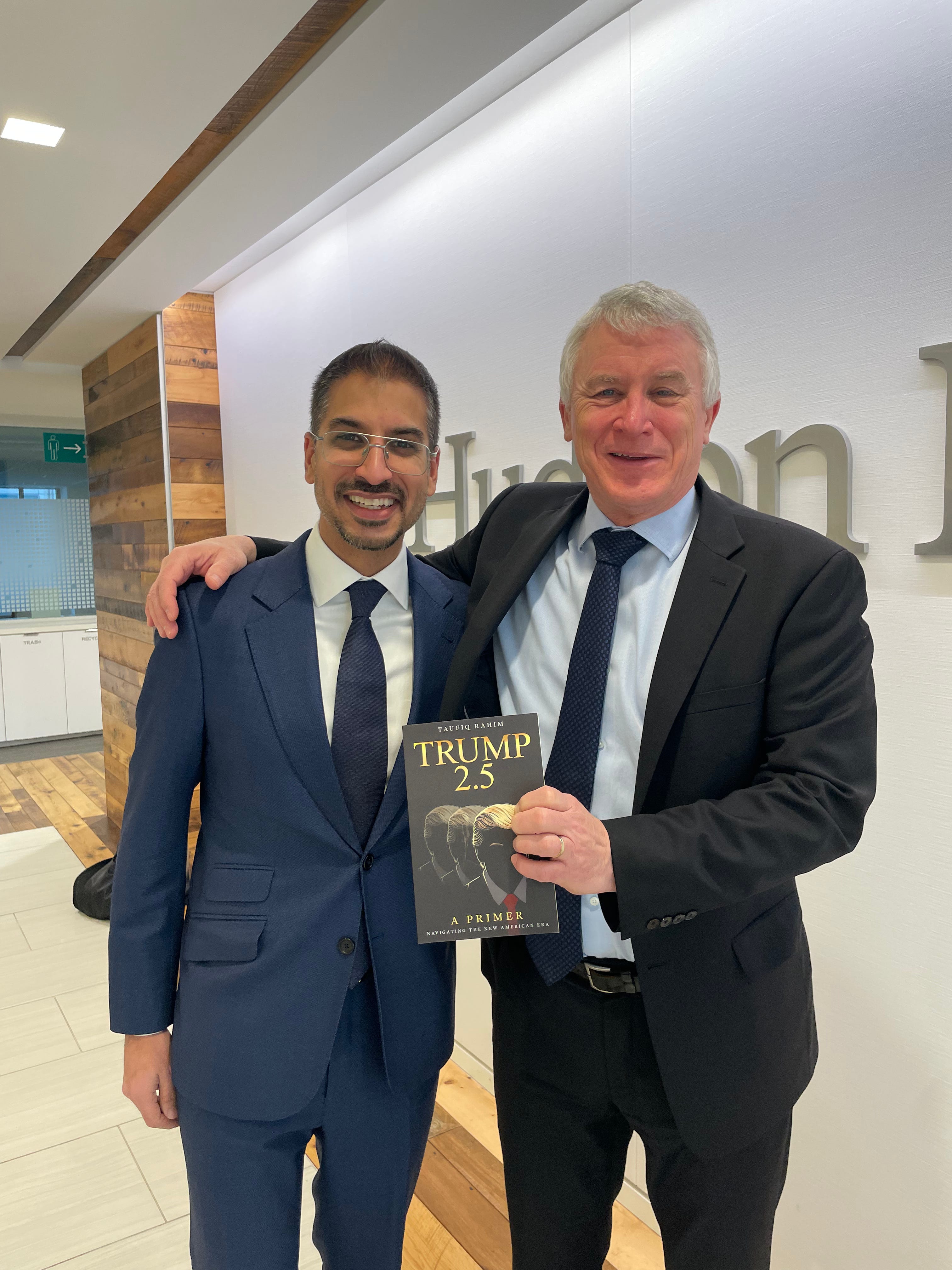
Overall, the administration appeared to be drifting into randomness, cannibalizing its own showpieces. Earlier that week, the White House had announced that the (Trump) Kennedy Center would be closing down for extended renovations. The venue had become a key staging ground for MAGA world in the first year, running under the auspices of the president’s utility man, Richard Grenell.
The previous fall I had attended one of the US-Saudi investment forums there. Billionaires and administration officials would regularly gather there with various foreign delegations. I knew several high-net-worth individuals – from foreign countries – who paid to attend galas to meet with the president and his team. It was commonplace.
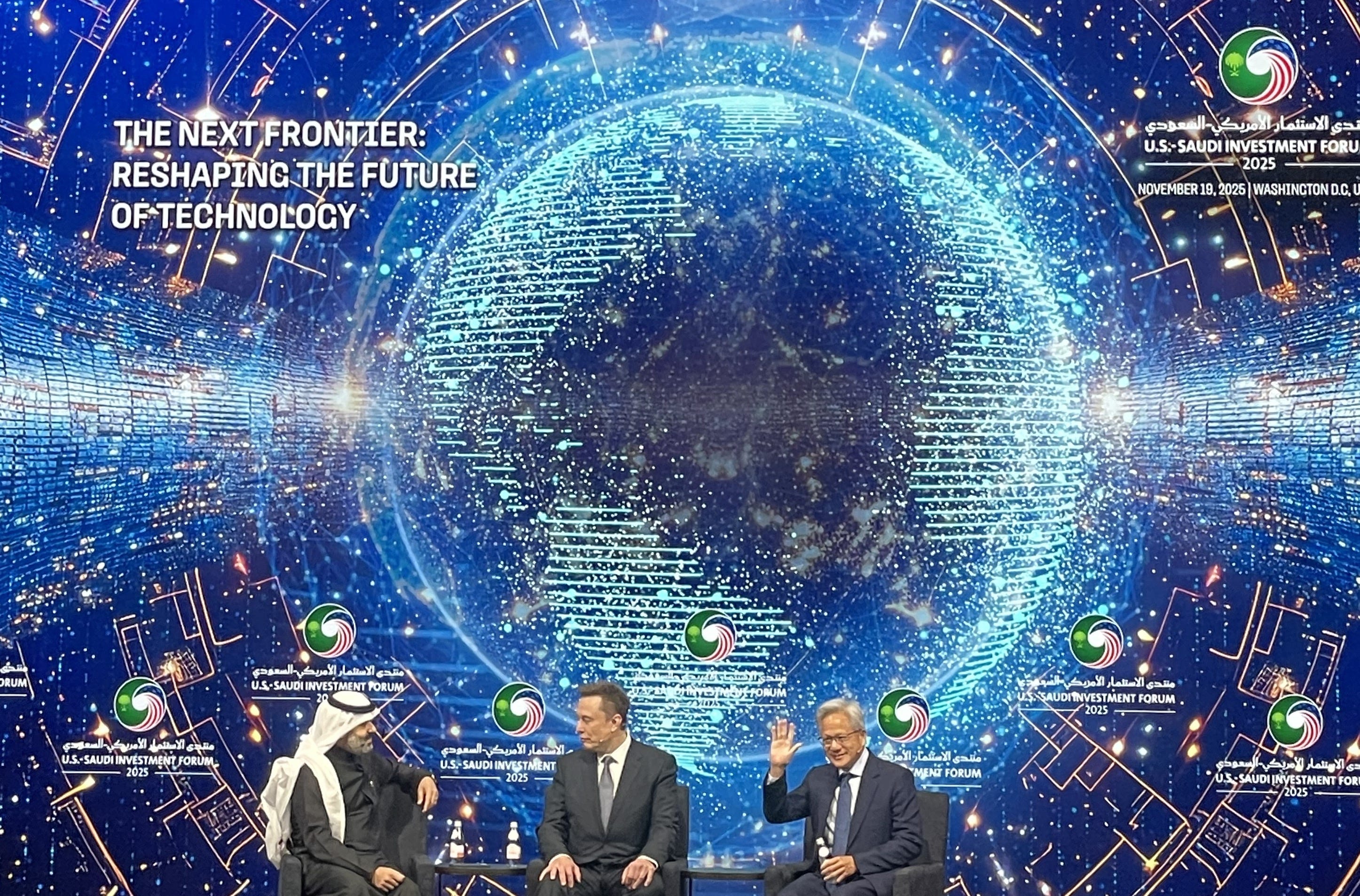
After a few other obligations in town, I made my way to the Center that evening to visit a friend who was on point for Grenell. He didn’t seem to be too concerned about what would happen next. He was looking towards his next opportunity. I could never tell if anyone working in MAGA world believed in the agenda or simply believed in the opportunity to have opportunities. Whatever the agenda of Trump 2.5 may have been, it had descended into inertia, captive to the interests of its many tentacles.
The next morning I flew to the Gulf, landing in Dubai on February 6. Palpable anxiety hung in the air. All signs pointed to further escalation. While Kushner and Witkoff were making their rounds nearby, it was clear the negotiations were faltering. I grew increasingly concerned – and I traveled back to Washington after a week in the region.
Over the decades, I had accumulated a number of relationships in the Middle East. As I charted the contours of Trump 2.5, I also had a growing set of entry points into the new politics in Washington. I pushed for a meeting with a key White House advisor who could influence discussion on Iran, or so I thought. Perhaps I could help propose some potential off-ramps. Naïve, of course.
It was a quotidian affair. As we sat in one of the nondescript Pain Quotidiens in the city, I prepared to share new ideas, relay sentiments I’d heard in the region, and see if we could structure a follow-up. By then, it was February 23; the hour was late. I felt a sense of urgency.
But my counterpart was not remotely in the same headspace as me. He seemed unconcerned about the war and was instead focused on how he would make ‘bank’ after leaving the administration, which turned out to be soon after. And that was the substance of our discussion. How to make money.
Perhaps an outside voice speaking directly to the president would have more luck. A prominent figure I often spoke to was heading to the Oval Office that same day. He also had high expectations.

On February 28, 2026, President Donald J. Trump initiated an attempted decapitation strike on Iran. And the rest, as we say, is history.
Billionaire World and MAGA’s Magic Mountain
Paolo Zampolli strikes a unique figure. Slightly hunched with an oversized face, he gallops and floats around a room, abruptly appearing behind you, before disappearing just as quickly. He famously claimed to have introduced Melania Knavs to Donald Trump. In the 1990s, Zampolli, Trump, and Jeffrey Epstein ran in similar circles, alongside model scout Jean-Luc Brunel.
While the administration had its official focal points, an underbelly of shadow men and women – often without any designation – were also dealmaking on behalf of the White House, interfacing with stakeholders hidden from view. They often had a direct line to the president. When the Department of Justice slow-walked the release of the Epstein Files in 2025, it raised many questions, including within the president’s own base.
The Epstein Class and the Shadows
Democratic Congressman Ro Khanna used the term “Epstein Class” to describe the “rich and powerful men who still have buildings named after them, who still are on corporations, are still in positions of prestige, who engage in heinous conduct.” His focus was on tucked-away enclaves and the horrors of abuse. This may have been what happened on Little Saint James Island or at the infamous ranch near Santa Fe. But the sexual crimes were part of a larger picture of an unaccountable elite in the shadows.
There were leading lights in the shadows: Apollo’s man Leon Black, Victoria’s Secret Les Wexner, JP Morgan’s Jes Staley, and others. The ticket of entry to this world was to be someone of influence, who could advance the central aim of all involved: self-enrichment. And that is what the Epstein Class was – or is. It was a network of a shadow world, focused on making money at the expense of everything else.
Jeffrey Epstein was the go-between, a dealmaker and rainmaker, and the ultimate fixer in this subterranean world of international finance. Epstein operated equally between Gulf finance, tech finance, and New York finance. It is why Epstein was as enthralled with Sultan bin Sulayem from Dubai as anyone else. Or why Ghislaine Maxwell was perhaps as close to Laurene Powell Jobs as she was to Prince Andrew.
Curious figures were also in the mix, including anti-establishment and populist cutouts like Peter Thiel and Stephen Bannon, both funded by Epstein and feted by him at his dinners. The Epstein class was not, in fact, about Epstein. It was simply the network of this unaccountable elite, with Epstein as a central node. Everyone was one degree of separation away from everyone else.
While Donald Trump had long ago severed ties with Jeffrey Epstein when he kicked him out of the club at Mar-a-Lago in the 2000s, the Epstein Class still existed, perversion or otherwise, and its fingerprints were all over the Trump administration from inception. Howard Lutnick, who oversaw the presidential transition, was Epstein’s next-door neighbor. While Leon Black may have been formally persona non grata, his son, Benjamin Black, became the head of the Development Finance Corporation. Marc Rowan, Apollo’s CEO, was appointed to sit on the Board of Peace, alongside other leaders.
The core of this shadow world was fully integrated into the administration.
Billionaire-ish World
“Another challenge will be the valid public perception that billionaires control decision- making in this Trump administration. Over a dozen billionaires have been appointed to key government positions. With emphasis on AI, technology, and economic growth, broader socioeconomic trendlines may be ignored.”
– Trump 2.5: A Primer
The billionaire tent in the Trump administration went beyond the Epstein Class. And it was no longer a shadow world. It was a sign of the times. Everyone could have a seat at the table – but you had to pay. It did not matter whether you were American or not. It did not even matter if you were a billionaire or simply could appear as one. There would be no FARA registration at Mar-a-Lago. Gulf billionaires sat alongside Russian oligarchs, with Bay Area venture capital raising from both, while White House officials fast-tracked projects.
Epstein had a certain discipline, chasing figures who he knew held influence, money, and power. He wanted to endear himself to Elon Musk. He sought to impress Mohammed bin Salman. He fought to get access to Bill Gates. He would never have given Turhan Mildon two seconds of thought.
Alina Habba was a glam lawyer who first met the president at his Bedminster Club. She served briefly as an acting US Attorney. Before she went from glam to sham, however, a feted affair was held in her honor in New York at the end of September, when she married 29-year-old Turkish billionaire Turhan Mildon. In attendance were retired boxer Mike Tyson, Egyptian billionaire Naguib Sawiris, Qatari mastermind Hamad bin Jassim, government leaders from Africa, White House officials, and Nelly, who serenaded all with lyrics from Ride Wit Me.
But as it turns out, the 29-year-old billionaire was actually 25, not a billionaire, and allegedly a front for political interests in Congo (DRC). Habba had also secured over $10 million a year for four years to secure a pardon for Julio Herrera Velutini, a Venezuelan billionaire. This all came into public view when Habba tried to settle a score with Grenell by appealing to the president. Somewhere, Jeffrey Epstein was watching in despair as clumsy successors tried to carry on his legacy.
When the gates of the White House opened on January 20, 2025, they were truly wide open. The foremost seat of power in the world was being made available to ‘billionaire world’ and all those who aspired to be part of it. A contribution to a PAC was no longer enough. Could you fund the new playground? Perhaps two columns for the ballroom? What about the new rose-less garden, styled à la Lago?
Being the King on Billionaire Hill was perhaps a lifelong dream for Donald Trump. As president, he relished the role. On each foreign visit, he took a retinue of billionaires in tow: Saudi Arabia, China, Davos. Billionaires making trillion-dollar deals. Was it hidden from view? Quite the opposite. After all, it was the Golden Age, and these were the golden geese. Not union leaders. Not the forgotten man or woman.
The Epstein Files represented an intrusion into billionaire world the administration now housed. The documents, as the president said, would embarrass a lot of his friends, important people: “A lot of people are very angry that pictures are being released of other people that really had nothing to do with Epstein, but they’re in a picture with him because he was at a party, and you ruin the reputation of somebody.”
In this new Trumpian world of billionaires, there was not one Epstein but many. Soon everyone wanted to become a mini-Epstein – a broker, a lobbyist, a hustler. Rather than being frowned upon, it was a role inspired by the most powerful figure in the White House: Chief of Staff Susie Wiles. Perhaps they also took their cue from the First Family itself, which had no shortage of interests, from meme coins to drones benefiting from proximity to the White House. While Habba was a clumsy example, others structured access at arm’s length by instrumentalizing members of the household to be the formal dealmakers.
The priorities of the dealmakers would override core parts of the administration’s agenda. When Agriculture Secretary Brooke Rollins was going to determine policy on glyphosate (i.e., Roundup), would she call on Calley Means or check in with Brian Ballard? On the outside, it was clear where to go for results.
Key stops included Continental Strategy, co-run by Marco Rubio’s former chief of staff, where former Chief of Staff Susie Wiles’ daughter was a partner; Ballard Partners, Wiles’s alma mater and now home to RFK Jr’s daughter-in-law, Amaryllis Fox; and Checkmate, where the son of key advisor Chris LaCivita leads public affairs. Of course, these were just the tip of the iceberg.
The optics of a populist presidency basking in the glow of billionaire world eroded the generational coalition that brought Trump back to the presidency. The steady drip of pay-for-play scandals also began to dominate headlines. This translated into a change in voter sentiment, contributing to the shock election of Zohran Mamdani on November 4, 2025, which definitively marked a vibe shift in the vibe shift. The new populist challenge was now coming from the left, powered by a recaptured Gen Z.
Within two weeks of Mamdani’s win, pollster Mark Mitchell went to the White House. Over lunch with the president, he laid out how the administration had lost its populist momentum and what it would take to regain it. The president even met with Mamdani that same week in the Oval Office.
The question that may not have occurred to Mitchell but may have been on Trump’s mind: why win over Gen Z when those who really matter are already in your corner?
The more important meeting that month was a dinner on November 12 of the who’s who of billionaire financiers.
President Trump knew which constituency was his real base.
MAGA’s Magic Mountain
When Donald Trump descended like a golden-haired peacock down the gilded escalators of Trump Tower, he shocked the world. His gruff, blunt-speaking manner drew disaffected Americans to him like moths to a flame. For them, this bellicose bully was speaking truth when no one even dared to hint at it.
From the GOP debate stage, Donald Trump discredited America’s War on Terror that had been a mainstay on the right. On the campaign trail, he tore apart the economic consensus on immigration and trade that had defined American capitalism for decades. His only stated objective was to Make America Great Again. MAGA.
Nick Fuentes, a 17-year-old teenager listening to the message in the suburbs of Chicago, lent his vocal support for this new type of politician. Fox News’ leading light, 47-year-old talk show host Tucker Carlson, became a prominent enthusiast, breaking ranks with many of his colleagues. A 42-year-old CrossFit trainer in Atlanta, Marjorie Taylor Greene, got involved in politics that year after hearing his message.
Donald Trump coalesced many disparate voices under one banner. Yet, the new acolytes had no organization; they were just voices. After the 2016 election, many became online influencers who grew in stature over the years. When Trump left office in 2021, the MAGA movement went back into the wilderness.
Traditional GOP structures and media remained, however. In that intervening period, some of these platforms, like the Heritage Foundation, hosted MAGA voices. And there were newer bodies like the America First Policy Institute (AFPI). Yet, both new and old required support. And they received it – from billionaire world.
As covered in Trump 2.5: A Primer, Donald Trump roared back to take the Republican nomination in 2024. The assassination attempt was a crucible moment. Influencers, non-traditional media outlets, and fledgling institutions once again found an umbrella of leadership. MAGA Mountain reemerged. Perhaps the old GOP would be subsumed by this now formidable force.
MAGA was approaching a decade on the scene. Mike Cernovich and Jack Posobiec gave the pulse of the original base. The cluster of stalwart voices attracted new ones. Parallel ideological pillars appeared, like Make America Healthy Again (MAHA). Dominant figures joined the fray, including Elon Musk and RFK Jr. MAGA was growing into a multi-faceted hydra that showed up visibly at campaign rallies, including at Madison Square Garden. There was a sense of permanence.
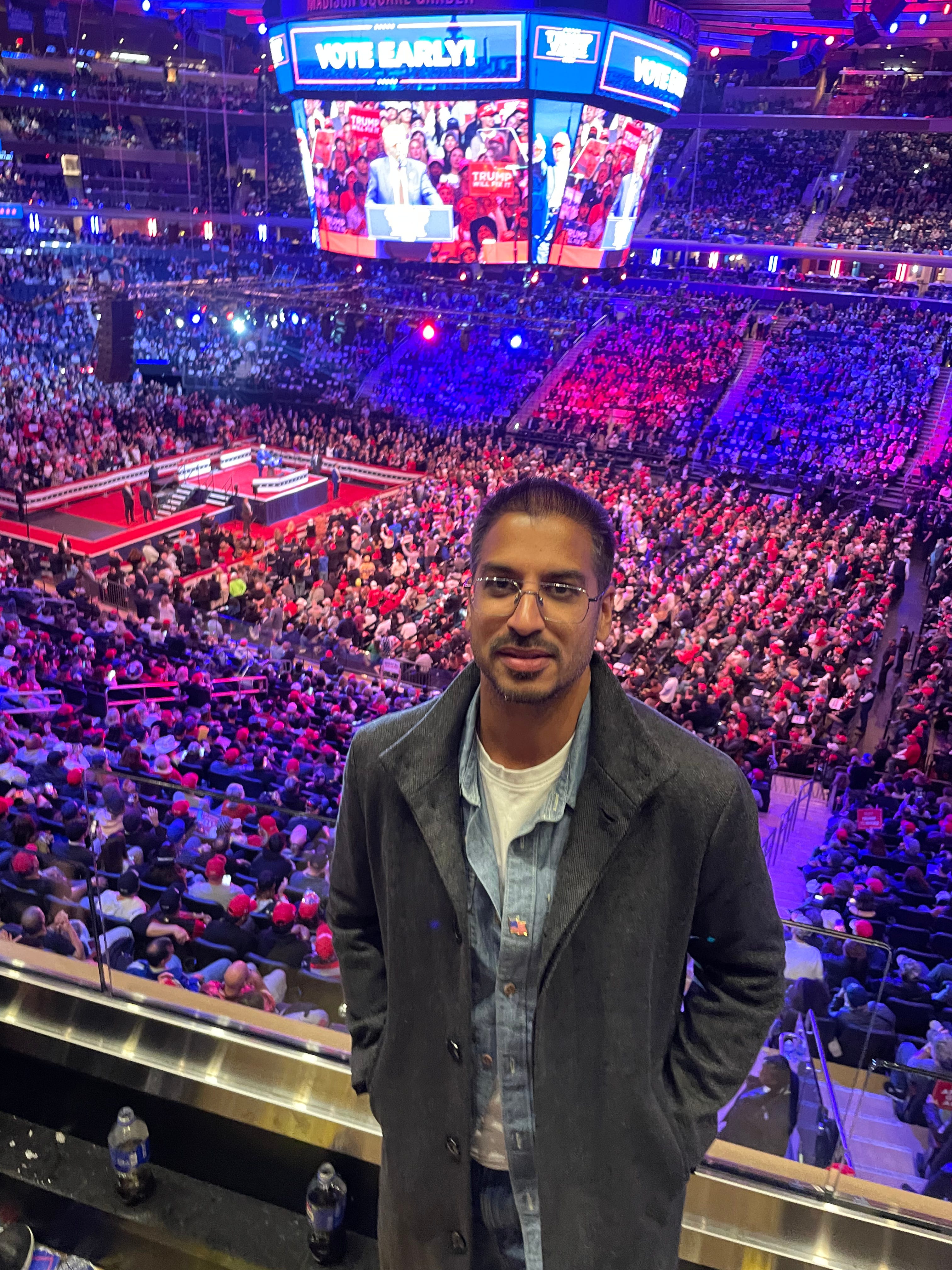
There was also coherence that was documented in AFPI’s strategies and the voluminous Project 2025 by the Heritage Foundation. Nevertheless, MAGA Mountain was still built around one man. The entire ideological relevance depended on him. What most on MAGA Mountain never realized is that they were also living in billionaire world.
As soon as the election was won, things became clear. Paul Dans, the architect of Project 2025, was blacklisted. Susie Wiles, Chris LaCivita, and Howard Lutnick became the most pivotal figures in the transition. The long list of MAGA foot soldiers who could serve as future personnel, compiled by former Trump body man John McEntee, went into the dustbin.
When push came to shove, MAGA had no independent infrastructure, leadership, or grassroots of its own. While it was an affinity slogan that appealed to millions, there was no MAGA without Donald Trump. That realization would slowly dawn on most of its vocal voices, when they would ‘chimp out’ (a controversial term popularized by MAGA influencers). No matter how loud they were, they were no match for billionaire world and the existing Washington establishment.
Throughout 2025 and 2026, each successive White House action provoked greater consternation on social media. The demise of DOGE, the delay on the Epstein Files, the first strike on Iran, the defense of H-1B visas, the importing of beef from Argentina, the dinner with billionaires, glyphosate – the outcry grew louder month-by-month.
But these were voices howling into the wind. President Trump gave them a name – Panicans. And he told them that if they didn’t like how things were going, he didn’t need them.
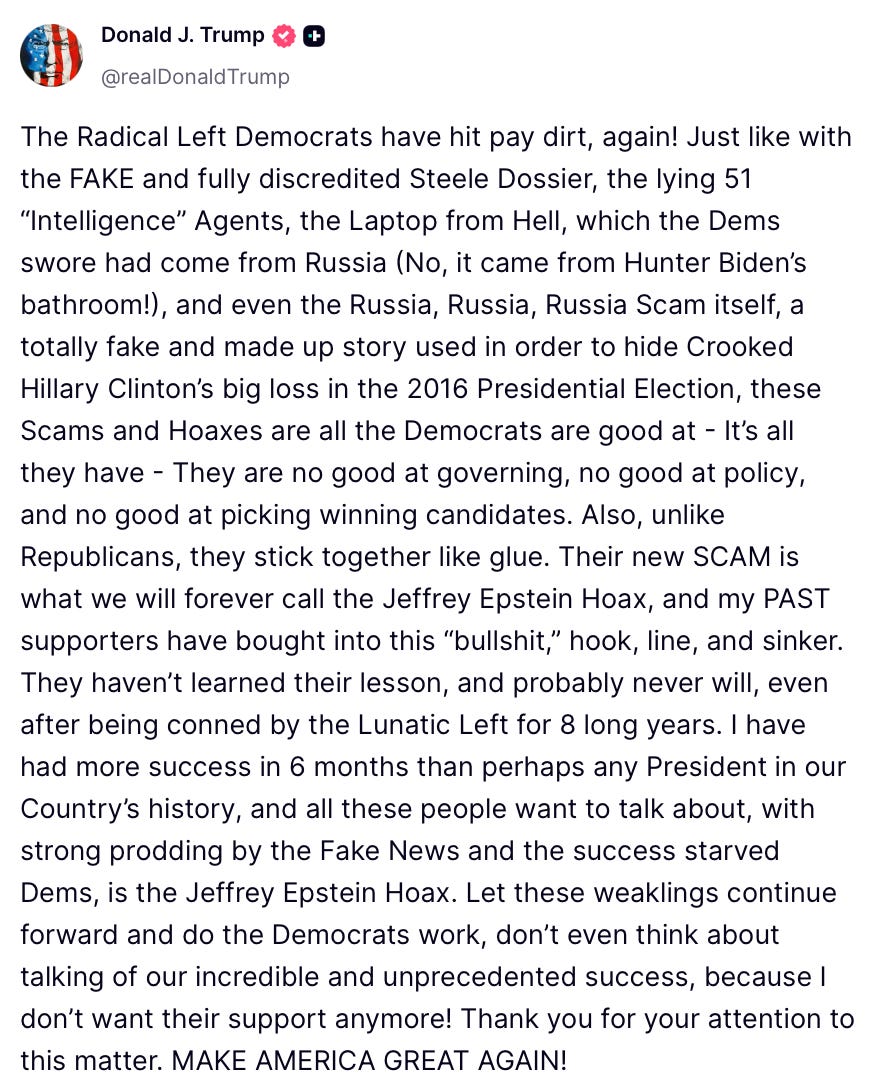
Could President Trump win without his own movement?
Power, Populism and the Emperor’s Clothes
“Trump’s return and decisive victory gives him an unprecedented mandate. His organization has clear capabilities that were missing in the first term. The current president is no ordinary second- term president. He has had four years to regroup, understand who his opponents are, and ensure that there is an effective team. The trials and tribulations he faced also led to newfound allies beyond the inner group from 2016 and 2020. ”
– Trump 2.5: A Primer
As the president answered questions from Ross Douthat of 60 Minutes after the 2026 midterm loss, he looked tired and defeated. Was this the man who, not so long ago, intimidated entire nations? This was who NATO’s Secretary-General called “Daddy”?
On January 20, 2025, Trump 2.5 was real. Who would stand in President Trump’s way? It was more than a return to the presidency. He had a popular mandate. The GOP had the House and Senate. Conservatives controlled the Supreme Court. President Trump’s reach extended far beyond Republican control of the legislative, executive, and judicial branches.
He had a cadre of lieutenants with their own followings. After overcoming assassination attempts, multiple trials, and all odds to win, his power rested on three pillars in addition to his popular mandate.
Media, Money, Mobilization
Guided by his son Barron and strategist Alex Bruesewitz, Donald Trump successfully became a podcast bro in 2024. It was not just the Joe Rogan Experience – candidate Trump was literally everywhere. There was scarcely a streamer or podcaster at the top of the charts who did not have him on. Everyone from Sneako to the Paul brothers was singing his praises. He was at the center of the zeitgeist, capturing the mindshare of young male voters.
In 2024, alternative media had started to gain more views than the major networks, cable news, and aging radio hosts, who were bleeding advertisers. The former had Gen Z as its key audience, while the latter catered to ‘Boomers’. At the presidential inauguration, podcasters visibly attended, including Theo Von, Adin Ross, Joe Rogan, and the Nelk Boys.
The convergence of Elon Musk’s money with MAGA added a pipeline of previously unseen financing. He quickly became the lead donor for wider Republican efforts. Alongside Musk came nearly all of Silicon Valley. Even figures like Naval Ravikant, previously apolitical but in Musk’s orbit, joined the movement. Tech finance, which was outpacing Wall Street in the American economy, was soon aligned with Trump 2.5.
It was a third dimension, however, that brought it all together and truly empowered the president: Charlie Kirk. Many Democrats still do not understand the power that Kirk brought to the table. More than President Trump himself, he held the keys to all the wings of the Republican Party, the old right and the new right – as well as the apolitical young men who leaned conservative. Kirk was not an influencer. He was not just an organizer. He was the organization.
His party was the highlight of the inauguration, attended by President Trump’s close circle, including his son, Donald Trump Jr. During the campaign, Kirk leveraged the media profile and money Trump wielded, converting that into rank-and-file voters. Turning Point USA had an infrastructure across the country that it had developed over 12 years. They had voter registration teams. In 2024, for the first time, the get-out-the-vote machine on the right rivaled that on the left. TPUSA and Charlie did not belong to the GOP – even though he emerged from it; Kirk was firmly within the new world of MAGA and the Trump 2.5 agenda.
When President Trump took office, the Washington GOP establishment was loath to oppose his policies. If they did, they faced the wrath of an uncontrollable new media on one hand and new money on the other, all backed up by a well-oiled Turning Point machine helmed by Charlie Kirk. Did they really want to face these three forces during the next primary? It led to total alignment.
With the forces of power intact, starting on day one, there was an onslaught of executive orders. The Musk-helmed Department of Government Efficiency (DOGE) became a bulldozer against the bureaucracy. Very quickly, Washington, D.C., and the way of doing business began to adapt to the president’s whims.
This translated into personnel and policy that fit the campaign agenda. The entire Cabinet was confirmed nearly as nominated, even lightning rods like Pete Hegseth, Tulsi Gabbard, and RFK Jr. And then came the truly seismic shifts. The border was closed, almost immediately. Tariffs went up on liberation day; stock prices be damned. Ukraine’s Zelensky was confronted in the Oval Office in front of the cameras, shocking the chattering classes.
Then USAID, a jewel in the crown of past Republican and Democratic administrations, was shut down in the middle of the night. On President Trump’s trip to Saudi Arabia, he normalized relations with the former Al Qaeda leader turned president of Syria and called out interventionist foreign policy in the Middle East in the speech, relegating it to the past. The full set of brazen actions prompted bipartisan consternation behind the scenes that made its way to Susie Wiles.
In his first four months in office, President Trump deftly wielded his populist power. With a touch of brilliance, Trump could charm the Arab and the Jew, the CEO and the working man, and bring everyone together around a single purpose. Who could challenge him? Billionaire world? He had them in check.
It seemed that there was no obstacle in the president’s way that he could not surmount.
Illusions of Grandeur
In the end, Trump 2.5 transformed into a White House of cards, despite its temporary bravado. When it fell, it fell precipitously. Remarkably, it was the president himself who dismantled his own base of power, piece by piece.
First, the president abandoned the new media that had backed him and had offered him a lifeline outside the traditional establishment. Instead, he resurrected almost every traditional news outlet, offering them interviews and access and, in turn, their corporate advertisers an audience. Within months, his phone number was in the hands of the entire White House press corps. Kaitlin Collins had higher priority than Theo Von for the administration, no matter how often he publicly criticized her. Every Sunday, cabinet officials made their way to the latest Sunday news show on NBC, ABC, or CBS instead of a livestream with Shawn Ryan, Andrew Schulz, or even the All-in Podcast. The president’s advisors, like Jason Miller, were even being paid by outlets to arrange interviews (in this case, Semafor).
Then one day Elon Musk inexplicably turned up with a black eye in the Oval Office. It was the day of his departure from the White House, May 30, 2025. The DOGE bulldozer would be no more. Musk would later cross a point of no return by accusing the president of being in the Epstein Files. Any future pairing would be one of Machiavellian convenience. Surely, other money remained, but it was for specific interests aligned with the Washington and GOP establishment. Musk was the alpha, on his way to becoming a trillionaire, compared to the other beta billionaires.
The final shoe to drop was Charlie Kirk, which happened before his assassination in September. By the summer, he was falling out of favor with billionaire world and even the president himself, particularly after Operation Midnight Hammer. At the Turning Point USA event in July, he famously held a debate between firebrand Dave Smith and conservative stalwart Josh Hammer on Israel. Kirk’s death left a gaping void. Without his leadership, Turning Point also faltered.
Its convening power was in decline. Moreover, without Charlie Kirk, who would convene the wings of MAGA and the GOP to settle disputes and keep them in one coalition? Even his wife was routinely mocked on the right side of the aisle. A video by comedian Druski, released in early 2026, went viral, including in conservative circles, garnering 100 million views within a day.
When the media asked the president about Charlie Kirk’s death, the president responded by talking about his big, beautiful ballroom. It was apt, as it was where he would retreat in the months that followed. On the 2024 campaign trail, the president showed up to events with able lieutenants by his side, each with their own audience and appeal. But who would be left when the November 2026 midterms came along? Not Tulsi Gabbard, Elon Musk, Tucker Carlson, or Marjorie Taylor Greene, or the real RFK Jr.
One person stood by his side: Marco Rubio. He also had a following, albeit in billionaire world. On the debate stage, Donald Trump had teased him as ‘Little’ Marco and had clashed harshly with him on forever wars. If anything, Marco Rubio represented the neoconservative vision of foreign policy that the president had publicly eschewed in Riyadh.
Yet just before that trip in May 2025, Rubio was appointed acting National Security Advisor (later becoming permanent), in addition to his duties as Secretary of State. After the president returned from the region, Rubio brought on Wayne Wall as the new point person on the National Security Council to handle the Middle East. There would be a new approach to the region.
When the president launched the war on Iran on February 28, 2026, he was flanked in the makeshift Situation Room at Mar-a-Lago by his two most trusted lieutenants, Rubio and Wiles.
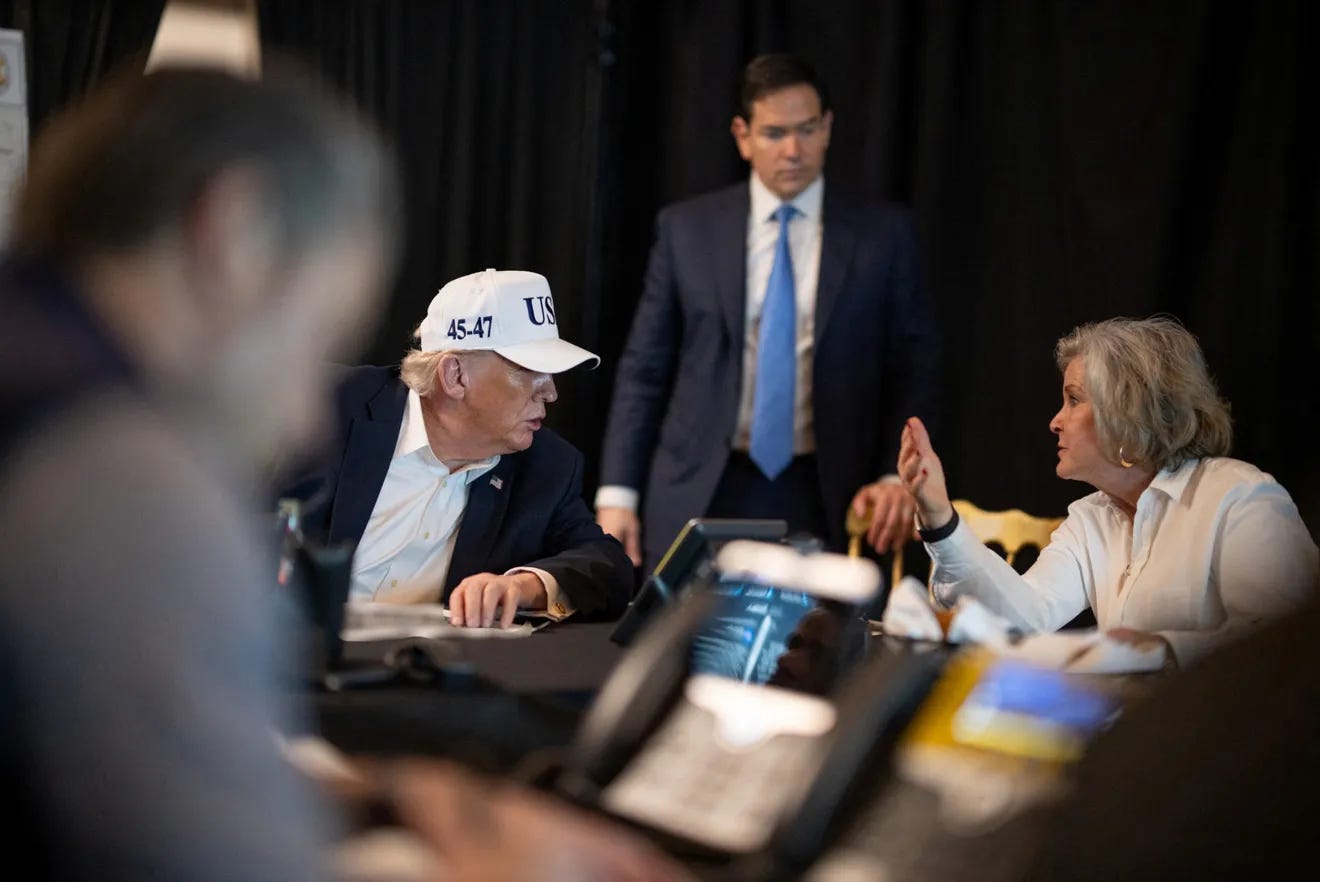
The Iran War showed the limits of American power for all the world to see. Yet it also served to show that the entirety of the MAGA agenda would take a backseat to yet another foreign war: MAHA, the Epstein files, the neo-Monroe Doctrine, corruption, migration, national debt, and affordability.
Ahead of the November elections, Trump completed 30 rallies in 30 days, attempting to echo his campaign from two years prior. Then he won the popular vote; now he was an unpopular fabulist according to his critics. He held the power of the Oval Office, but he had no power of his own. There were no podcasts to go on. There was no Musk on stage, no support from Tucker, and no Charlie Kirk to turn out the vote.
All that was left was an emperor with no clothes for all the world to see, serenaded by the screeds of Mark Levin and Laura Loomer.
Pandora’s New American Era
On November 4, 2026, America awoke to a new era. In Washington and in capitals around the world, it signaled the beginning of a restoration to the way things were. Trump 2.5 was such a dominant force that the loss of populist power convinced many that it was a loss of power altogether. Although Republicans lost both chambers of Congress, Donald Trump remains president.
President Trump is now in a position similar to that of past presidents. He is Barack Obama in 2014, George Bush in 2006, and Bill Clinton in 1998. As with the other three, the opposing party controlled both chambers of Congress. It may even accelerate progress in some areas.
During his later tenure, President Obama focused on foreign policy, signing the Iran deal, opening relations with Cuba, and advancing the Paris climate agreement. President Clinton shepherded China’s entry into the global economic order through supporting its accession to the WTO, initiated a military intervention in Kosovo, and presided over an attempt at a sequel to the Camp David Accords. He also worked with Congress to famously repeal Glass–Steagall restrictions. President Bush initiated the surge in Iraq, then presided over the response to the global financial crisis.
Overall, executive authority remains in the hands of President Trump. The executive orders that promulgated policies around immigration, traditionalism, and deregulation are still there. In fact, under the new Chief of Staff Stephen Miller, some policies will become more entrenched, not less.
The Trump White House will move the ball forward in the second half in some ways that are more transformative than in the first two years. Trump will not relent on geopolitical confrontation and negotiations as they relate to Iran, China, and Russia. Within weeks of the midterms, the president held an unprecedented trilateral summit with Presidents Xi and Putin. Momentum on the domestic agenda will be slower; still, there will be attempts at bipartisan legislation.
While the focus will be on aspects of the agenda he campaigned on, the president will likely home in on cementing his legacy. In that sense, the coming period may most accurately be defined by a new slogan:
Make Trump Great Again.
Whither MAGA
What then happens to MAGA? There are think tanks, institutions, and media outlets that operate under the mantra of Make America Great Again, but it is mostly in name only. Many prominent figures who once carried the MAGA mantle now associate it with the toxicity of the caricature it turned into under the Trump administration: a billionaire playground that turned the world once again into a battleground for endless war.
While MAGA began as a movement under Trump over a decade ago, it also usurped a lot of the energy of a more grassroots movement, the Tea Party, that emerged in the wake of the global financial crisis, in early 2009. In that way, nearly 18 years later, we are at another generational moment. What will come next, at least on the right, is being born today and will not just be distinct from MAGA but grow in opposition to it, much as MAGA grew in opposition to what came before it.
The president after his term will still perhaps seek to solidify his establishment. This will likely come through his presidential library, the MAGA super PACs, and of course the Board of Peace. There could even be a legacy role created within the Republican Party itself.
In a long interview, McEntee, one of the original hatbearers of MAGA, remarked: “There’s a new establishment, a MAGA establishment. There’s an entire industry around this...Our question as young people or right-wing people should be, how do we challenge the MAGA establishment?”
Whether or not McEntee is a trusted messenger (like many original stalwarts, he has taken a different path today, in his case lobbying for Chinese companies in Washington), the message is itself telling. The disaffected voters who voted for the president in 2024 are still there, and many did not show up to the polls for the midterms.
What does an anti-establishment movement against MAGA from within the movement even look like?
Pandora’s Era
The New American Era is ultimately beyond the reinvention of MAGA. It is not about left or right. It is not even about Donald Trump.
Age of Sovereignty
Under the Biden administration, there were nearly 7.5 million illegal border crossings, a number that fell to near zero at the outset of the Trump administration. In her first call with President Trump, Texas Governor-elect Gina Hinojosa spoke about the importance of maintaining border security. This will not be reversed by those seeking to win the next presidential election.
What Trump called ‘Liberation Day’ became a defining moment that has unleashed resurgent protectionism in the United States and around the world. Countries, along with the United States, are investing in their own supply chains. The Trump administration has also taken state-owned equity positions in some of America’s largest companies, like Intel. The move was mirrored in Canada, as the government took a similar stake in Cohere.
The investment in American reindustrialization was bolstered by the Big Beautiful Bill that has supercharged the defense industrial complex and energy industry. One of the administration’s most understudied moves has been redefining the Office of Strategic Capital (OSC), which now commands about $200 billion in multi-year financing. This is supercharging efforts already underway in everything from drones to critical minerals.
The Iran War exposed the limits of American power but also the importance of hard power overall. By treating adversaries and allies alike, America has spurred governments to reorient how their military-industrial complexes are structured, how resilient their economies are, and what sovereignty means.
The crossing of the Rubicon unleashed responses that will be difficult to reverse, meaning this dynamic is here to stay.
Movements for Economic Populism
After the pandemic, inflation accelerated across America, peaking at 9.1%. When President Trump left office in January 2021, gas prices were $2.39 per gallon. On Election Day 2024, they reached $3.10. In his inauguration speech, he stated he would “defeat what was record inflation and rapidly bring down costs and prices.”
The Tea Party was a revolt against Wall Street with a parallel on the left in Occupy Wall Street. While Hillary Clinton eventually won the Democratic nomination in 2016, Bernie Sanders had a groundswell of support among younger voters. In his first campaign, Trump himself said: “The hedge fund guys are getting away with murder. They’re making a tremendous amount of money. They have to pay taxes.”
On November 3, 2026, gas prices were $4.14 per gallon, due in part to the Iran War and also speculation. Inflation was persistent, housing prices were still high, and healthcare was becoming unaffordable. All the while, the president was touting Wall Street's latest highs, not critiquing hedge funds. Resurgent economic populism on the left has temporarily absorbed the populist energy, most evocatively embodied by New York’s mayor.
We are now in a time when this message is endorsed across the political spectrum. In a poll earlier in 2026, 80% said the rich have too much political power in the U.S. While this White House may have governed differently than the campaign that brought it to power, the underlying theme of the insurrection within MAGA and on the left is the same: rejection of billionaire world.
Even if the slogan changes, the hat is not going back in the bag.
Anti-System Politics
“They’re bringing drugs. They’re bringing crime. They’re rapists. And some, I assume, are good people.”
- Donald Trump, June 16, 2015
Incendiary politics have characterized the last decade. Taboos have gone out the window. Civility has fallen by the wayside. Anything and everything is on the table. When Elon Musk bought Twitter in 2022, it also opened the floodgates of online trolls. The Donald Trump of 2015 would be seen as a political angel eating a cupcake, lost in today’s sea of shocking discourse.
From Dan Bilzerian to Hasan Piker to Nick Fuentes, the most popular streamers speaking to the future base of all political candidates hold nothing back. No sacred cow is off-limits. The entire system is up for indictment. Israel and the Jewish lobby are just the recurring topics du jour.
The anti-system sentiment, now nascent, seeks to burn it all down. It has moved beyond sloganeering of ACAB or groyperology. Voices question the very fundamentals of the West. Why should Russia be an enemy of the United States? Was stopping Hitler wrong? Should wealth be expropriated forcibly? Should all immigration be banned?
Yet the sentiment is not about any one issue. It is that nothing is off limits. And when nothing is off limits, it can all be discussed. More than anything, Trump 2.5’s restoration of the elite led to the backlash that handed the Democrats Congress. If this Congress also fails to deliver, the backlash that comes could be even more visceral.
The future veers more toward a new political force than toward Republicans or Democrats.
Project 2029
“The Trump 2.5 era will pass, and by January 20, 2029, another president will be in the White House. As always, events— even seismic political ones—come and go. It is instructive to understand the current moment and examine how it will contribute to a new opening and related shifts that will define the next 15 years and beyond.”
Trump 2.5: A Primer
The next president will assume office nearly a decade and a half after Trump entered the American political scene. American politics has not breathed in a long while without Trump’s oxygen to feed it. Along the way, dramatic events altered the course of society and the economy in America and the world.
The COVID pandemic. Gaza. The Iran War. Inflation was generational. Billionaires became trillionaires. AI is a technological super moment. 2029 is a long way from 2015. Politics today, however, is still trapped in the past.
On the surface, the next two years will still be dominated by the president and responses to him. Countless investigations and oversight hearings will surface hitherto unseen corruption. Even the presidential cycle for both parties will be shaped by his presence. Yet, the under (or over)currents around sovereignty, populism, and anti-systemism have their own momentum and messengers.
Gen Z shaped the 2024 election, but the future of politics will be influenced by the younger half of Gen Z that has not yet come of age. They are AI-native, streamer-led, and post-partisan. Project 2029, in whatever form it takes, will emerge from them. In that sense, it is beyond the reach of the establishment. The next president may marshal the groundswell from this cohort but could just as easily seek to suppress it. It may simply be too volatile.
Ultimately, Donald J. Trump will pass from the center of the scene. But so will the response to him. American society and the world will finally have to reconcile with everything else and everything new. And there will be a lot to reckon with.
Even Pandora doesn’t know what is in store for us all. As we look ahead, we may ponder:
Who will be great again in the new era?
Additional Resources
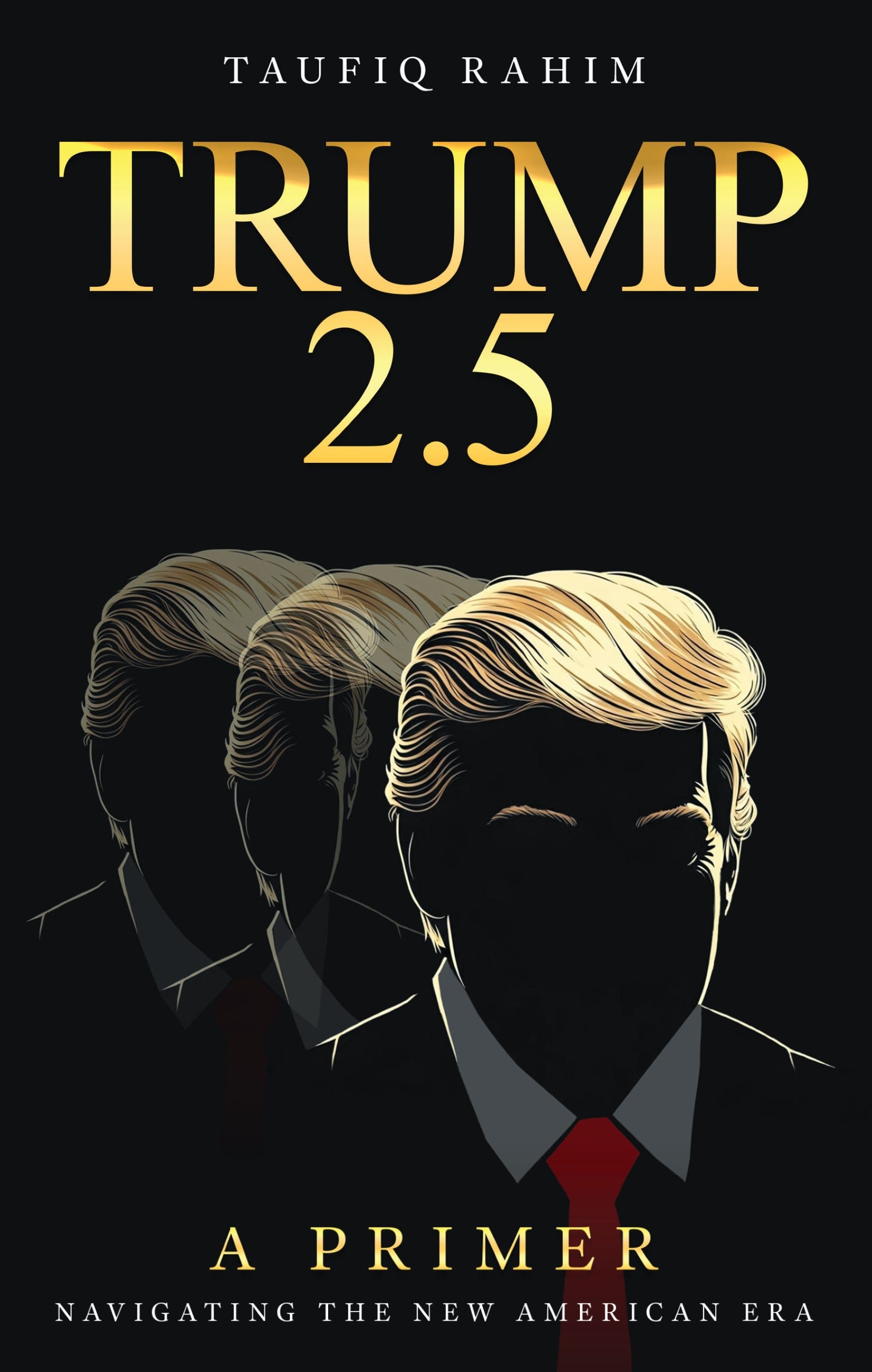
Trump 2.5: A Primer
GEOPOLITICO

Weekly Primer
A Retrospective at One Year

This Special Edition marks the one-year mark of the inauguration of President Donald J. Trump.
State of Trump 2.5

This Special Edition marks the first State of the Union address by President Donald J. Trump.